Our impact
Support our workWellbeing impact for children and teachers, at scale
Across our work, supporting teacher wellbeing has proven to be a necessary delivery condition and powerful pathway for improving children’s wellbeing, development, and classroom engagement. Our results from Khushi Shala (Children’s classroom activities) and Hausla (Wellbeing skills for teachers) in India back this up and suggest this is a viable way to make mental health a lasting part of how education systems work.

teachers and leaders reached globally
%
teachers improved their WHO-5 wellbeing scores after Hausla
direct implementation cohort; effect size = 0.49

%
children improved their wellbeing after their teacher was trained
effect size = 0.30

MOU with Rajasthan education department
Teachers’ wellbeing
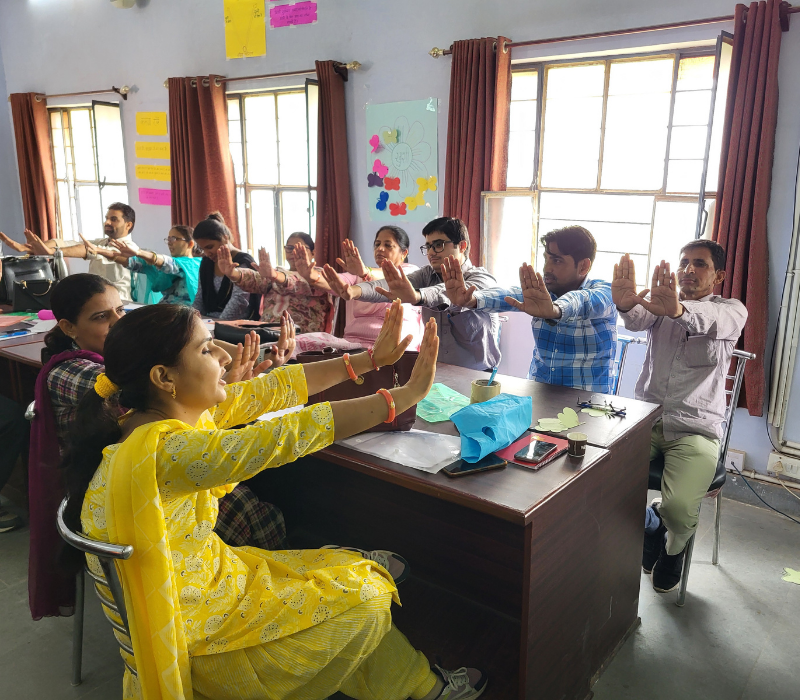
Teachers participating in our trainings leave feeling confident using the materials in their own lives and in the classroom. They consistently rate it the best training they’ve experienced and recommend it to their peers.
Most teachers start their own wellbeing practices and many share them with their families. As teacher wellbeing improves, that shift shows up in the classroom, supporting children’s wellbeing too. In Hausla, that improvement showed an effect size of 0.49, stronger than any comparable program.
Now, with Khushi Shala scaling to reach 120,000 teachers and 3.3 million children per year, and Rajasthan’s Education Department investing $4 for every $1 Brio spent in 2025, this work is bound to create systemic change.
96%
started their own wellbeing practices after Khushi Shala training
97%
felt confident to implement the curriculum after Khushi Shala training
84%
rated the quality of Khushi Shala training as ‘excellent’
71
Net Promoter Score across government-teacher training
Children’s wellbeing
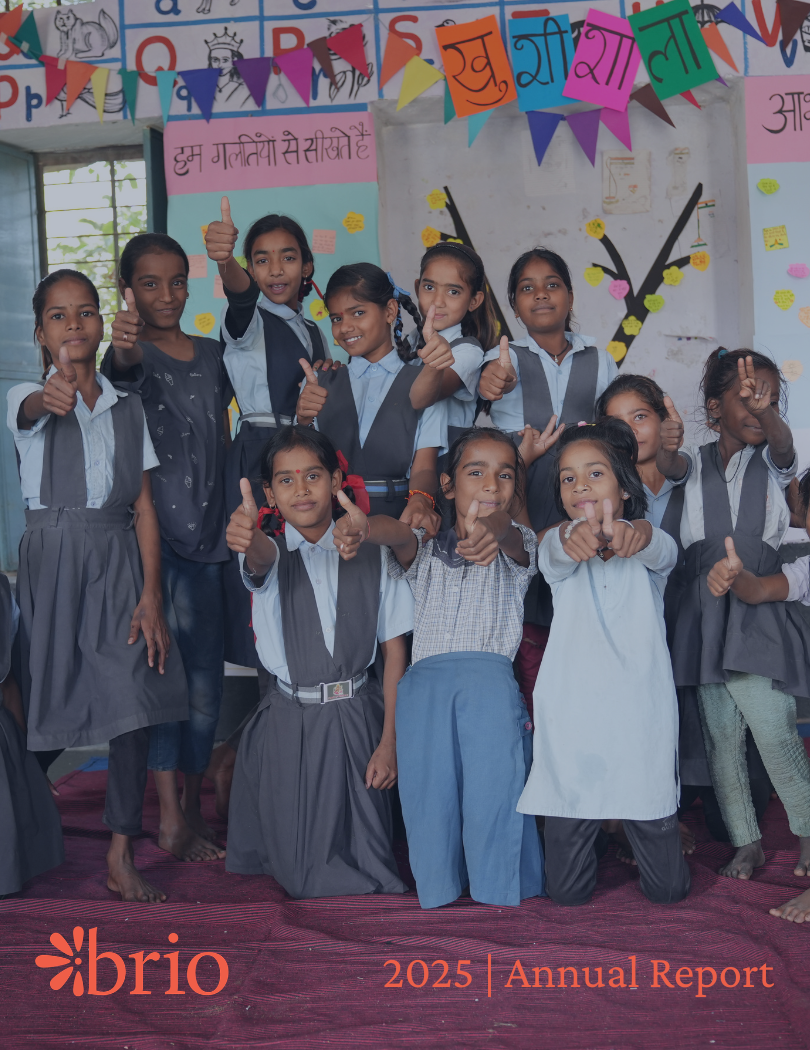
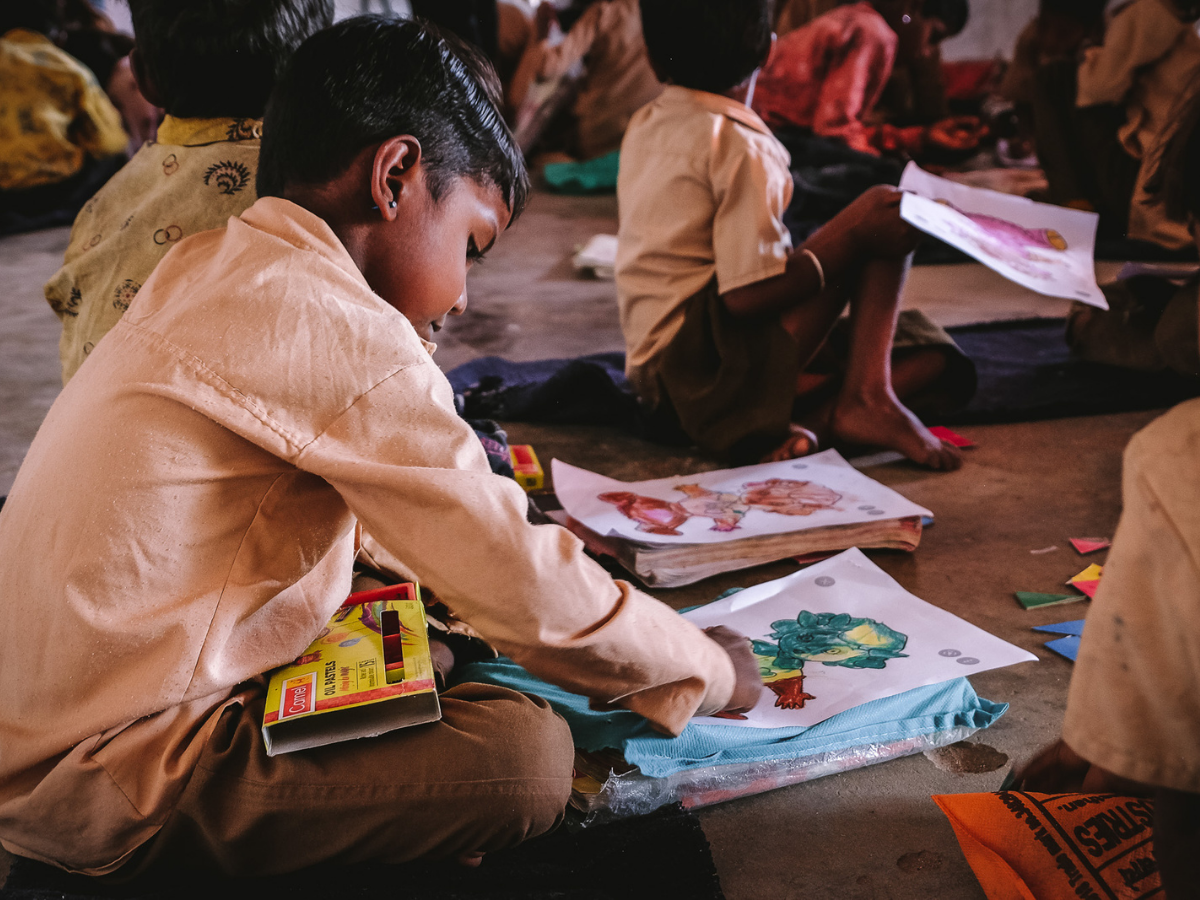
After our 2024 pilot, Phase 1 of Khushi Shala launched across every district in Rajasthan between 2025-2026. Across all districts, children’s wellbeing improved at an effect size of 0.30 – well above comparable programs and all the more significant given that this isn’t a targeted-user intervention. It’s population-based intervention, reaching whole classrooms for <$1 per child per year.
Across 32 schools surveyed, 78% saw their avergage child wellbeing scores improve— so the positive effect was not just located in a few excellent schools, but the majority.
Here’s what this looks like in practice: more questions asked, feelings named, ideas expressed, attendance rising, and the change reaching well beyond the classroom.
44,890+
children reached by a Khushi Shala trained teacher
56%
children improved their wellbeing in Phase 1 scale-up across 33 districts
effect size = 0.30
78%
schools saw average child wellbeing improve
15%
teacher-reported increase in school attendance after Khushi Shala pilot
How we measure our impact
At Brio, we aim for impact that is authentic, deep, and lasting. So we don’t just look at group averages from pre-to-post program, we also want to understand how meaningful the transformation is at the individual level. Across programs, we use relevant measures and statistical analysis to deepen our understanding, and leverage participant feedback to learn and improve. Plus, we always collect qualitative data – stories, impressions, drawings, observations – often starting there and seeing if they are underscored by what the numbers are telling us.
Toward 4 million children and teachers by 2029
Explore our system-embedded programs and find out how we’re scaling children’s and teachers’ wellbeing in collaboration with our local partner, Kshamtalaya Foundation, and the Education Department of Rajasthan.
Khushi Shala – flourishing classrooms
In Rajasthan’s public schools
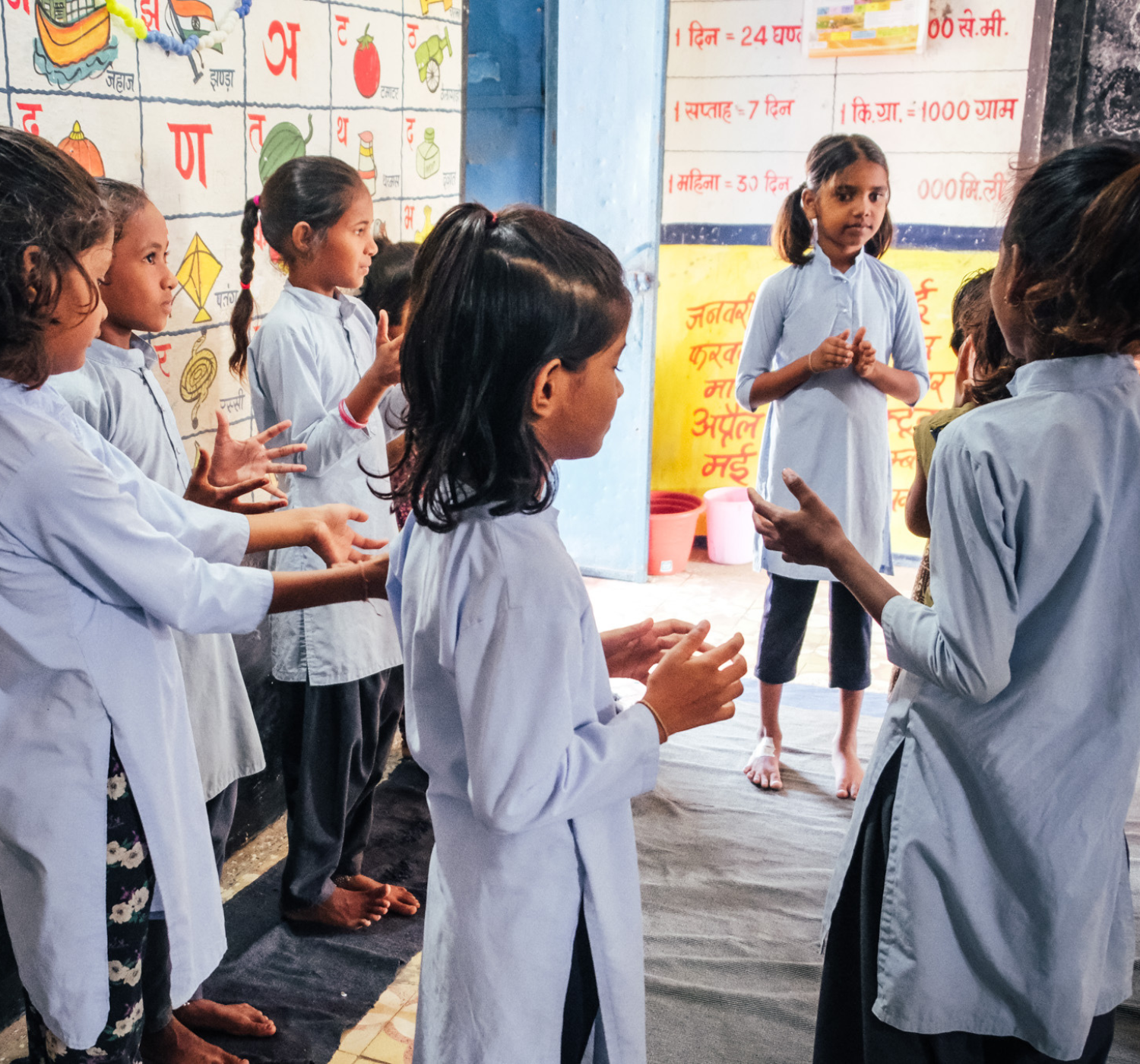
Co-designed with Kshamtalaya Foundation and the Rajasthan education department, Khushi Shala integrates mental health in public schools across Rajasthan’s 33 districts. After a successful pilot with 120 teachers and 1,300+ children, we are now scaling state-wide, training teachers and school leaders to support the wellbeing of 3.3 million+ children and 120,000 teachers every year.
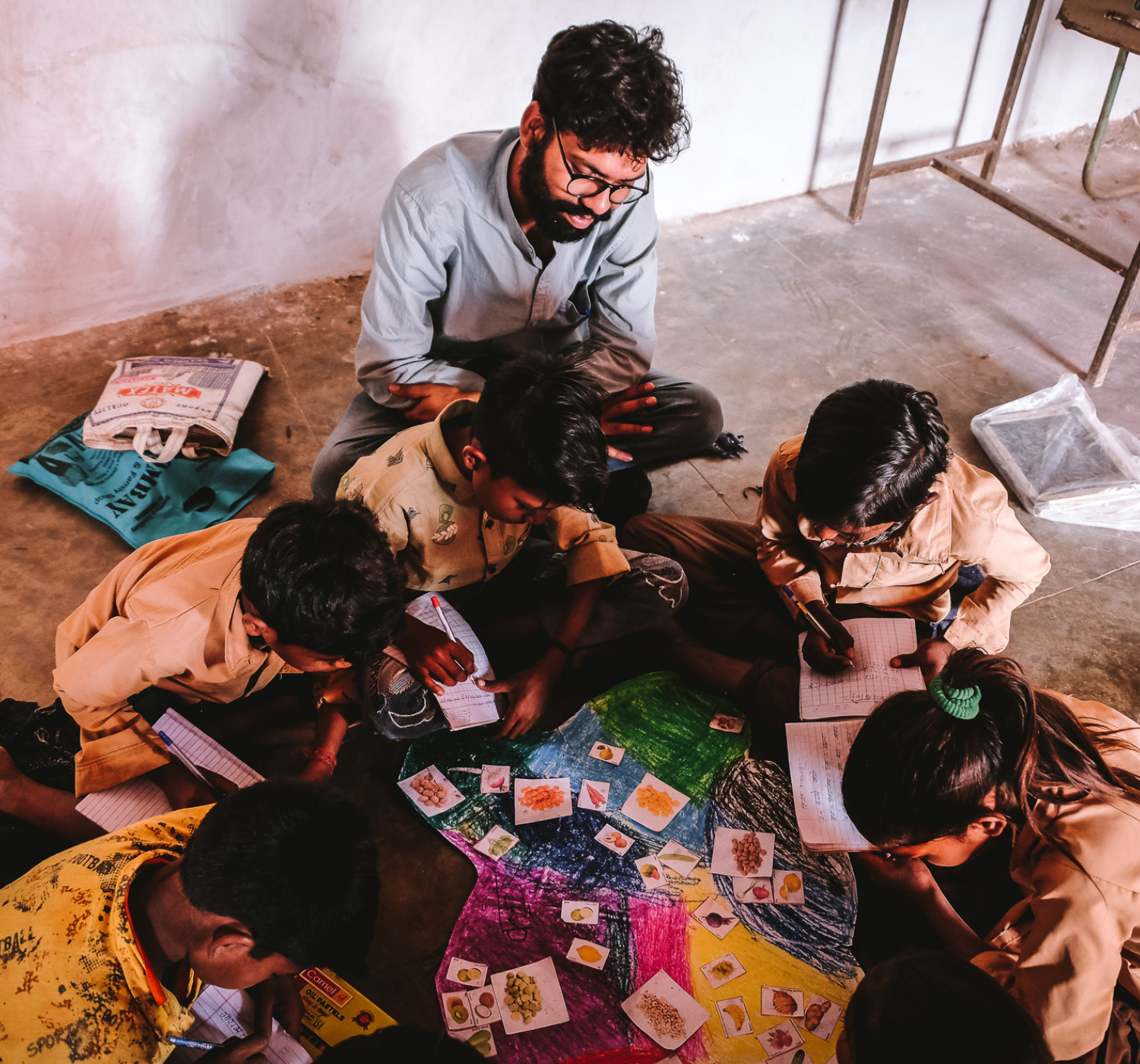
Hausla – wellbeing skills for teachers
In Rajasthan, Delhi, and Bihar
Co-created with Kshamtalaya and government-school teachers, Hausla is a wellbeing program for educators across India’s public schools. So far, the program has reached over 132,500 participants, significantly improving their wellbeing, mindfulness, and resilience, and making classrooms more engaging, compassionate, and nurturing.
Dive into our annual reports