
Khushi Shala – flourishing classrooms
Support our workCultivating children’s mental health across primary schools in Rajasthan
Khushi Shala helps children build critical mental health skills ahead of adolescence by equipping and supporting the person at the heart of their daily lives: their teacher. Co-created with Kshamtalaya Foundation and Rajasthan’s Education Department, it’s a primary school curriculum and teacher training program where teachers develop these skills within themselves first– so children absorb them through someone who already lives them. The result: deeper school engagement, social growth, and greater resilience and agency in daily life.
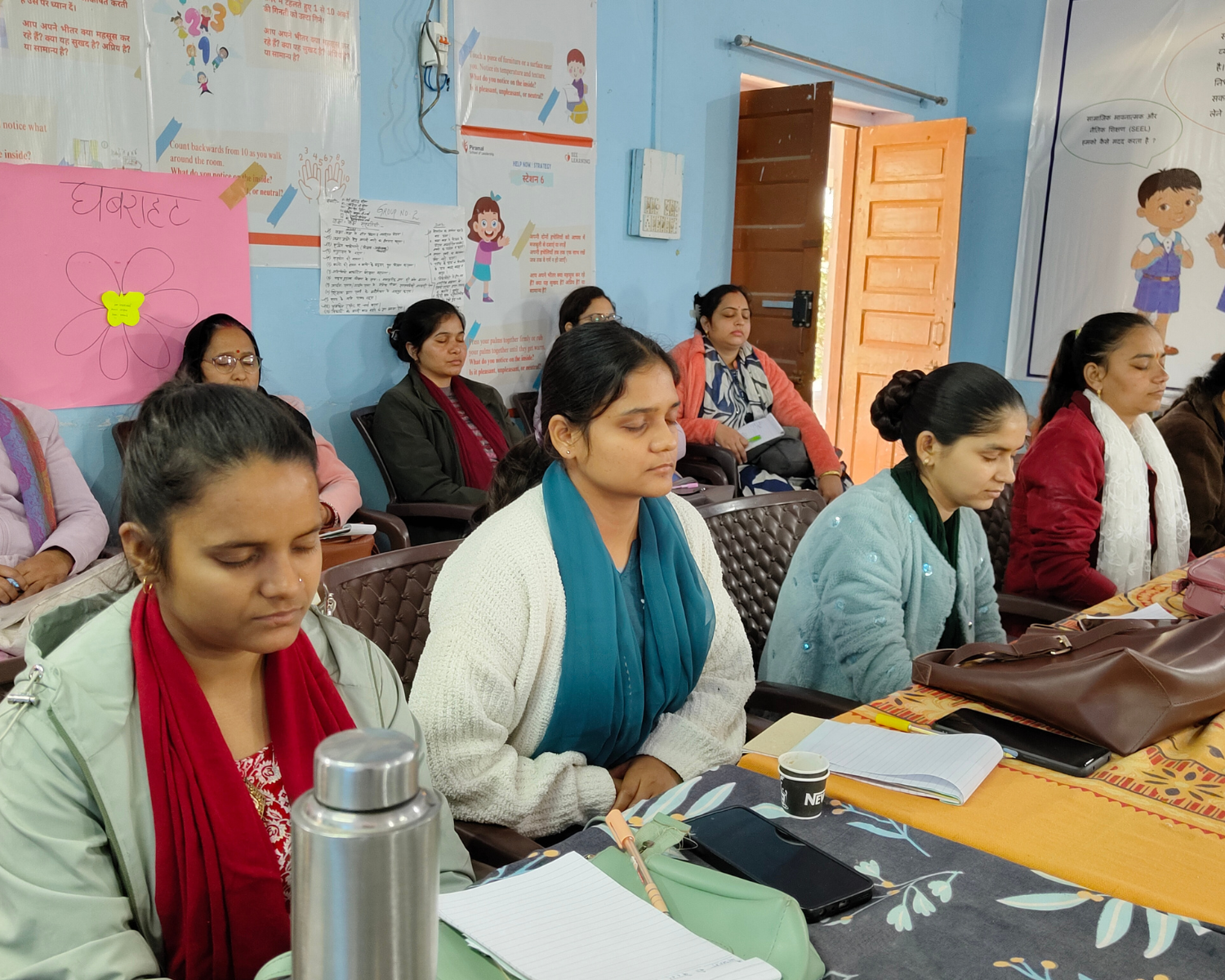
Starting with teachers’ wellbeing
India’s National Education Policy of 2020 mandates social-emotional learning. The post-pandemic mental health crisis makes it urgent. But most teachers are handed curricula to deliver, not practices to live– and with 78% reporting burnout, their stress shapes how they show up in the classroom every single day.
Children spend six days a week with their teachers, and that presence is where wellbeing is either built or eroded. Khushi Shala starts there: building wellbeing in teachers first, so they live it before they teach it.
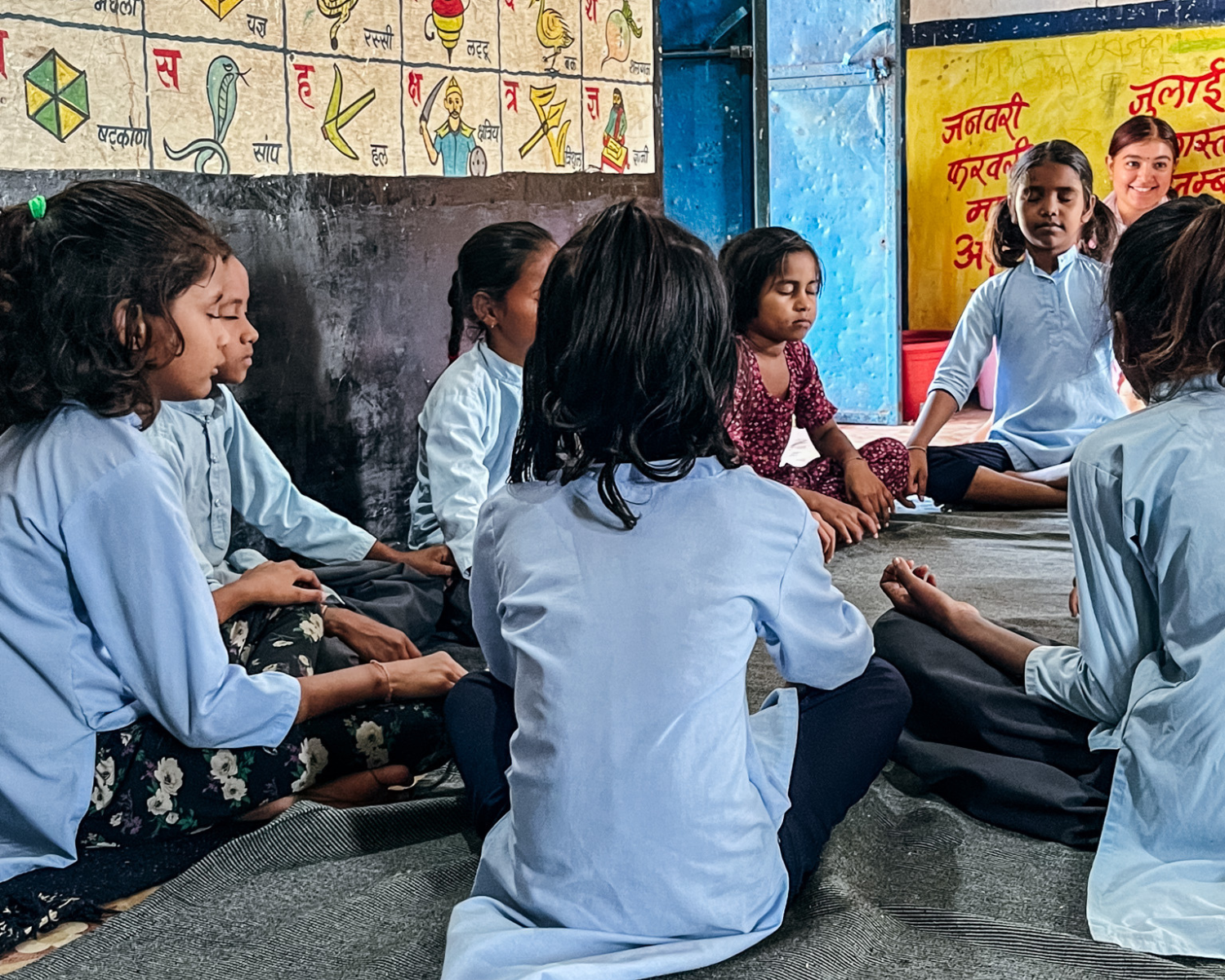
Scaling to reach 120,000+ teachers and 3.3 million+ children per year
What began as a pilot in 60 schools in 2024 is now backed by the largest in-person teacher training budget on any program in Rajasthan in 30 years.
The state of Rajasthan has adopted Khushi Shala as its official children’s wellbeing program and is investing its own resources to roll it out state-wide. Through Hausla Circle, a joint initiative of Brio and our partner, Kshamtalaya, we’re ensuring teachers have the support they need. By 2029, every primary grade child in Rajasthan’s public schools will have a teacher trained in Khushi Shala.
Rooted in three pillars
Khushi Shala is organized around three pillars drawing from Acceptance and Commitment Training (ACT), an evidence-based model for improving mental health. With over 1,100 randomized controlled trials, ACT is one of the most rigorously researched interventions in the field, offering skill-based protective measures. Each pillar is taught through stories and metaphors, so the ideas are portable, culturally resonant, and something teachers can make their own.

Be present
Watching thoughts as leaves drifting downstream, not commands to obey.

Have compassion
Meeting your own difficulty with the kindness you would offer a friend.

Do what matters
Choosing a direction and acting on it – a values-aligned compass for everyday choices.
The Khushi Shala curriculum
The Khushi Shala handbook is a six-unit activity book for ages 6-11– what a teacher reaches for to create a thriving school day. More than a curriculum, it is a facilitation guide, turning key mental health skills into practices a teacher can bring alive in the classroom in an authentic, embodied way.
1. Read the body
Body awareness; identifying physical sensations as the first expression of feeling.
2. Watch the mind
Observing thoughts as transient mental events, not commands to follow.
3. Be kind to self
Self-compassion when struggling; sorting personal beliefs from inherited ones.
4. See the others
Interdependence; recognizing the people who hold up daily life.
5. Choose direction
Identifying personal values and using them to guide everyday action.
6. Act on values
Designing and carrying out a real project in school or community, aligned with values.
What’s happened so far?
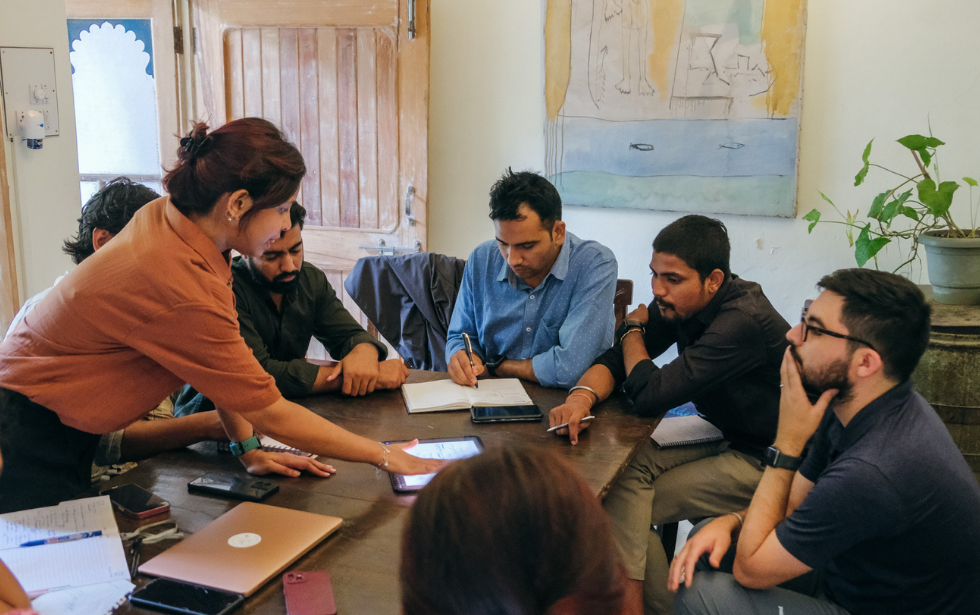
2022-2023 | Co-creating the program
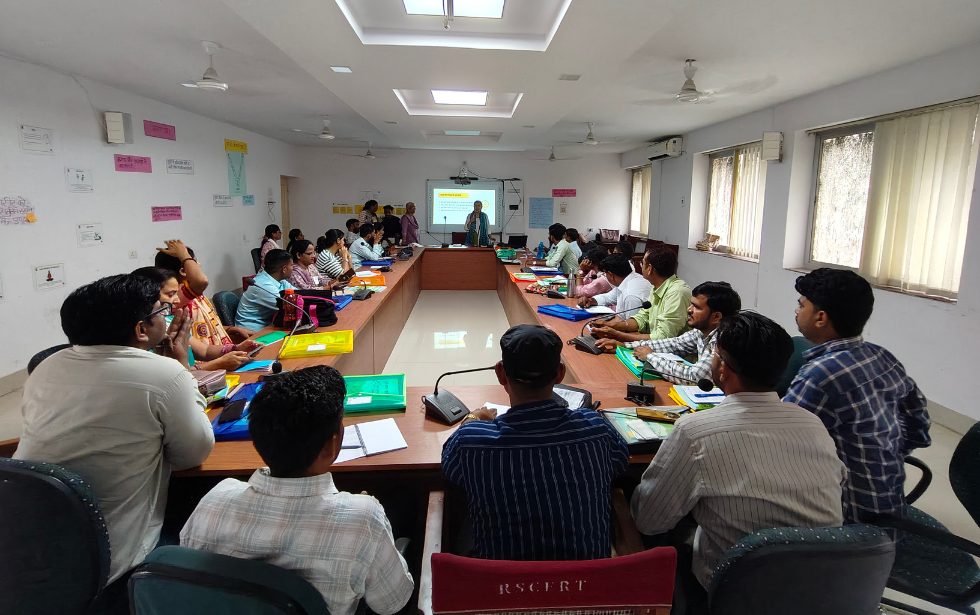
Brio and Kshamtalaya worked alongside RSCERT, teachers, and community members to develop a curriculum and teacher training program for grades 3-5, drawing equally on psychological research and the knowledge present in Rajasthan’s schools and communities. RSCERT hosted every convening, design session, and round of teacher feedback.
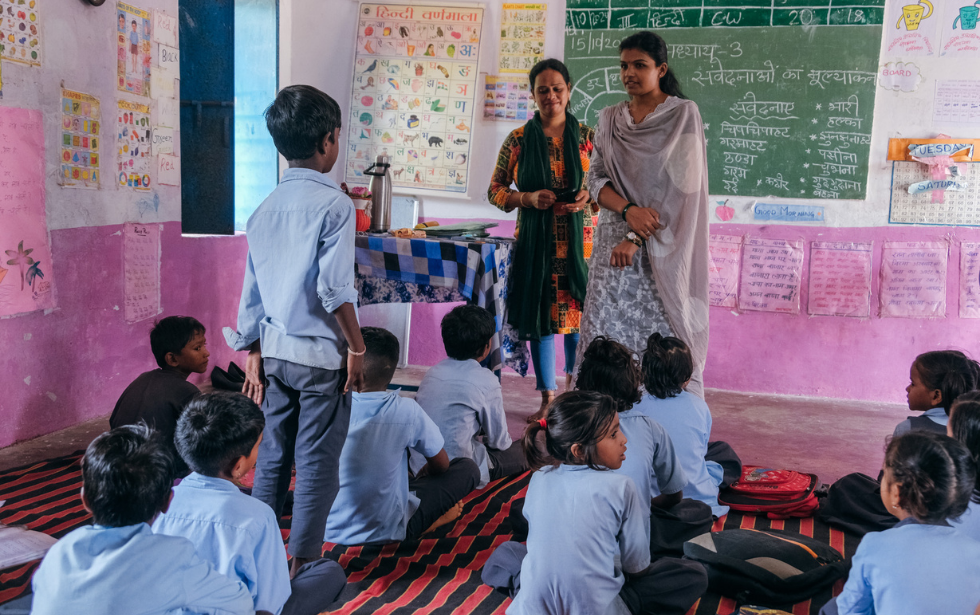
2024 | Successful pilot
120 educators piloted Khushi Shala across 60 schools in Banswara and Sirohi, reaching 1,300 children+ in grades 3-5. Children’s wellbeing improved with statistically significant results well above comparable programs. Teachers didn’t just effectively adopt the curriculum, most of them also started wellbeing practices in their own lives.
2024-2025 | Public sector adoption
The results and feedback were so compelling that Rajasthan’s education leadership formally adopted Khushi Shala as the state’s official children’s wellbeing program. In 2025, they signed a 5-year MOU with our local team, allocated dedicated teacher training budget for FY26-27, and embedded Khushi Shala in the official teacher training calendar.
2025-2026 | Teacher training at scale
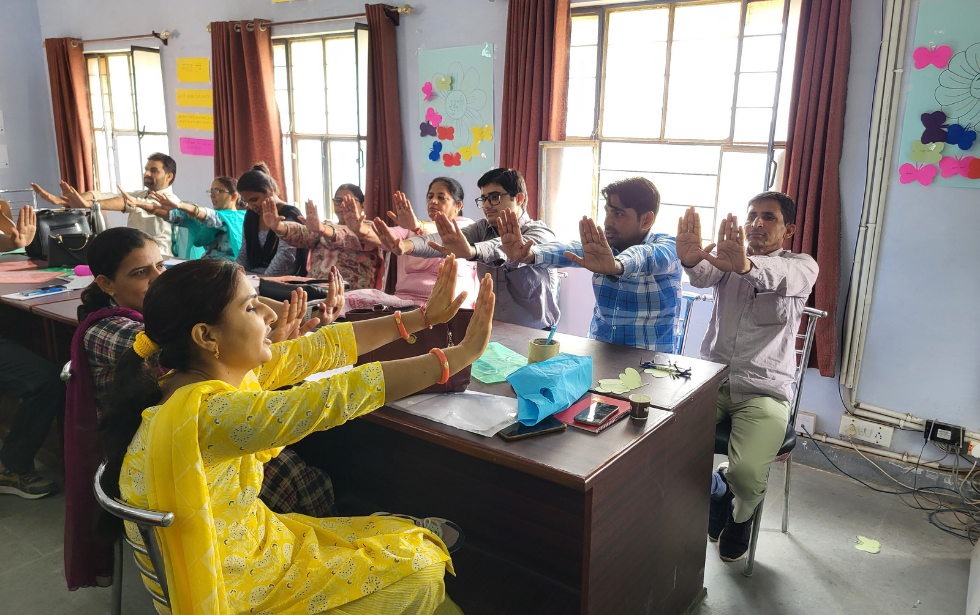
By early 2026, in-person training had rolled out across all Rajasthan’s 33 districts, with 1,249 teachers and district leaders trained (full training costs covered by the state), reaching 43,590 students. Light-touch teacher support, including peer learning circles and personal connection, aim to fuel a teacher-driven movement.
2026 | Historic budget, state-wide rollout
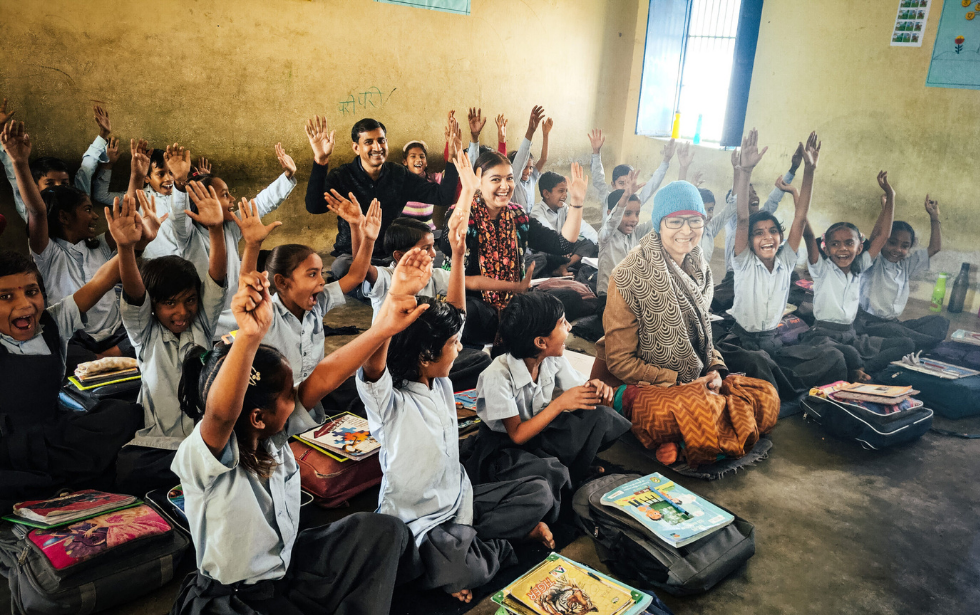
In May, Rajasthan approved the largest 3-day in-person teacher training budget on any teacher program in the state in 30 years– 11,300+ teachers for Khushi Shala and a separate PM Shri model schools allocation, bringing the 2025-2027 in-person total to 15,000. State-wide rollout is now underway, aiming to equip 120,000 teachers and reaching 3.3 million children annually.
What’s the impact so far?
120 teachers piloted Khushi Shala in 2024, producing promising mental health shifts for 1,300+ children across 60 schools. Since then, a Phase 1 scale-up across all districts of Rajasthan trained an additional 1,249 teachers, reaching 43,590 children.
For teachers
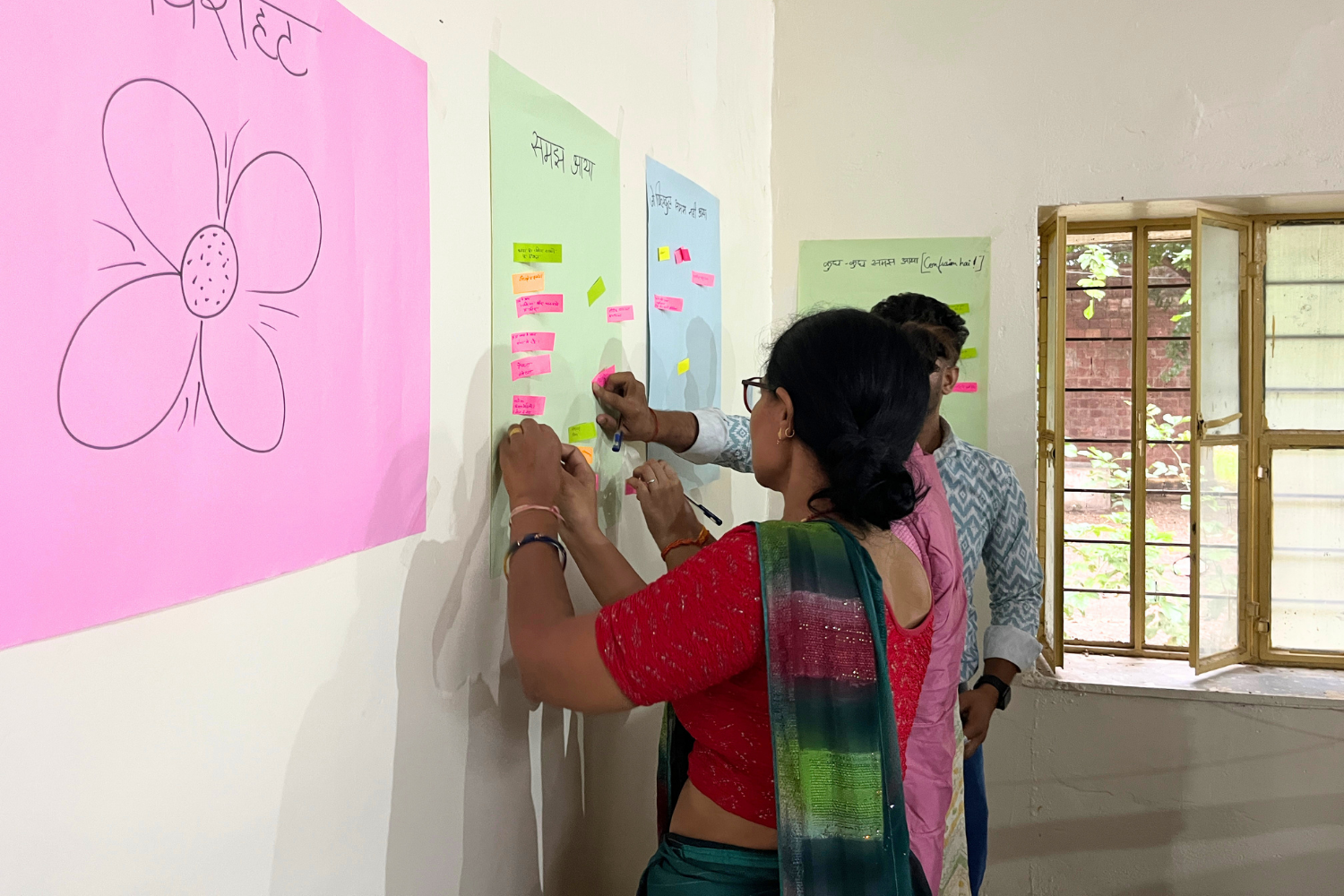
Across the teachers who participate in training, many describe it as the best training they’d ever experienced, and are eager to bring the practices home to their own families as well. Wellbeing facilitators shared that they wished they’d grown up with it.
After the pilot, nearly a third of teachers went further than asked, creating their own additional materials to bring a chapter to life. That spirit of ownership tells us something important about what’s possible when a program is built around lived experience rather than external prescription.
1,369
teachers trained through June 2026
91%
pilot teachers found the curriculum useful
97%
pilot teachers felt confident to implement the curriculum
96%
pilot teachers said they started wellbeing practices in their personal life
84%
pilot teachers rated quality of training as ‘excellent’
87%
pilot teachers described the activities as helpful & interesting
71
Net Promoter Score of Khushi Shala training, far above field norms
4:1
government co-investment ratio for scaling Khushi Shala in 2025
For children
After just four months of classroom implementation, Khushi Shala had very promising results, with girls showing the most striking growth based on teacher observations.
Improvements were measured through the validated WHO-5C wellbeing index for children, and our own behavior-based Life Skills Assessment, tracking self-awareness, self-expression, and self-in-community skills, with statistically significant results across the group.
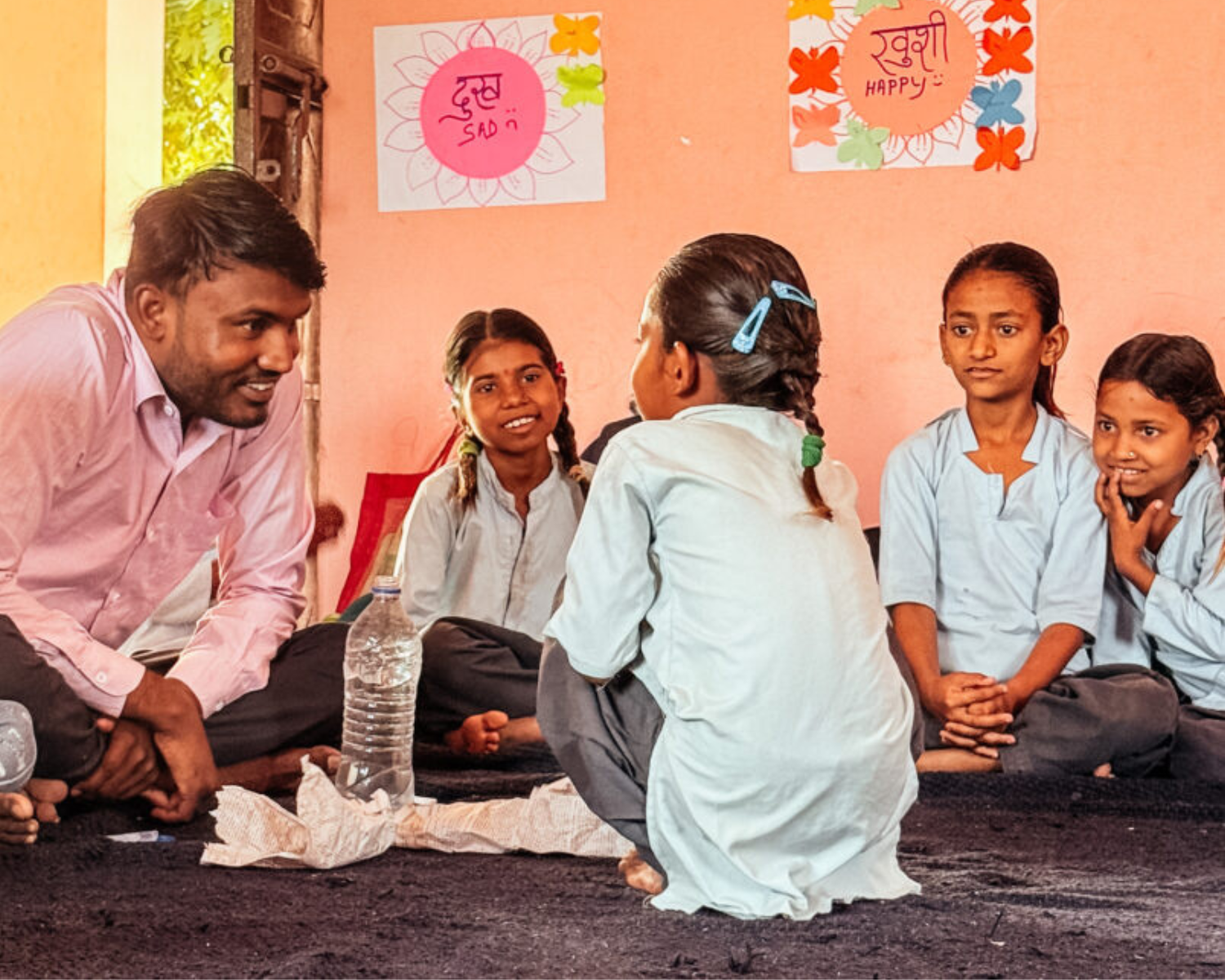
Teachers described children naming their emotions and sharing their thoughts more openly, with that openness carrying into other classes as well. Attendance also rose, including on Saturdays, when children chose to go to school to take part in wellbeing activities.
44,890+
children reached so far, incl. pilot
56%
students improved their wellbeing after their teacher was trained
effect size = 0.30
78%
schools saw average child wellbeing improve
15%
teacher-reported increase in school attendance after pilot