
Hausla – wellbeing skills for teachers
Support our workNurturing teachers’ wellbeing across India’s public schools
School mental health initiatives often leave educators out, even as the demands on them grow. In India, 78% of teachers report burnout. But when teachers cultivate positive mental health skills, classrooms become more engaging, compassionate, and nurturing. Launched in 2020 with Kshamtalaya Foundation and government-school teachers, Hausla is a 21-day program that helps educators build psychological flexibility through audio lessons, facilitation, and shared reflection. So far, the program has reached over 132,500 educators across the country, improving wellbeing, mindfulness, and resilience.
2,000+
Teachers participated in Bihar pilot
2,000+
Teachers participated in Rajasthan pilot
128,500+
Teachers reached through partners, and gov of Bihar and Rajasthan
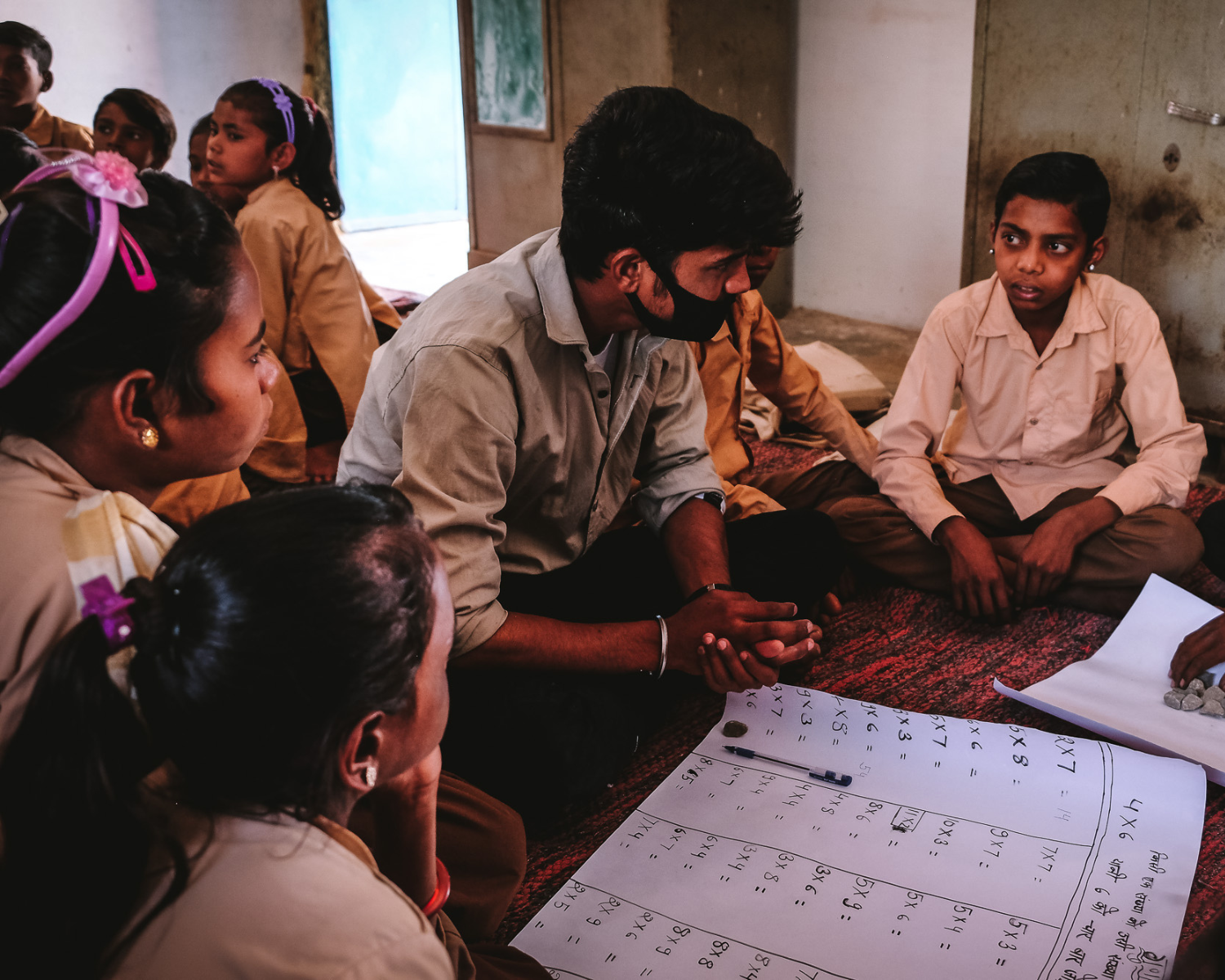
Why Hausla?
In India, the same teacher running a classroom is often also the polling officer, the census-taker, the public-health responder – the visible face of government in the community. In more than 100,000 public schools, that teacher is the only one on staff. It’s thus no wonder that more than three quarters of teachers struggle with exhaustion.
That pressure doesn’t stop at the classroom door. Children take in what a teacher brings with them, and few adults are more influential in their lives. But when teachers experience wellbeing themselves, that steadiness travels into how they respond to a frightened child, a chaotic morning, a hard week. Over a career, a single teacher can impact thousands of lives this way.
21 days in three movements
The skills in Hausla come from Acceptance and Commitment Training (ACT), one of the most rigorously researched models in mental health, with over 1,100 randomized controlled trials behind it. Together with Kshamtalaya we contextualized it for India’s public classrooms – not generic SEL imported content – as brief audio sessions of lessons, stories, practices and reflections, reachable with minimum technology and paired with the follow-up and peer cohort that make practice stick. Three pillars shape the program.

Be present
Your core daily training in attention
– breath, posture, sensation – as
reliable anchors in the inevitable
hard moments of teaching.

Have compassion
Catch a difficult feeling while it’s still small. Meet it with self-compassion so emotion regulates rather than runs you.

Do what matters
A steady self is the start. A vitalized classroom is the work. Teachers act on what they actually value and need.
What’s happened so far?
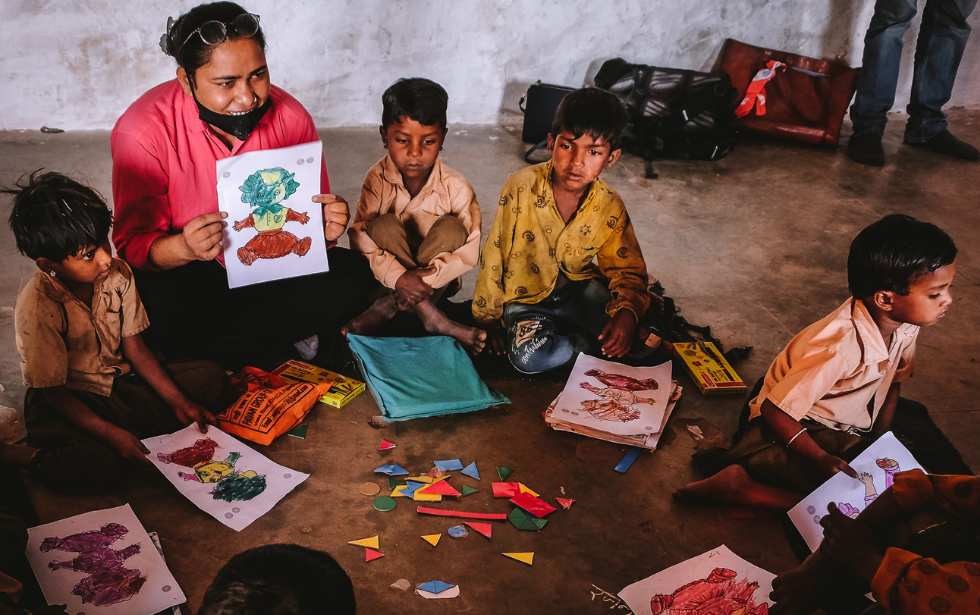
2020-2021 | Wellbeing through Covid-19
Brio and Kshamtalaya designed a contextualized audio wellbeing program teachers could join even with low tech access. Through the pandemic’s peak, thousands took part in Hausla, sharing the audios with family and friends. Early evaluations showed less stress, greater emotional awareness and regulation, and a stronger sense of connection amid deep isolation.
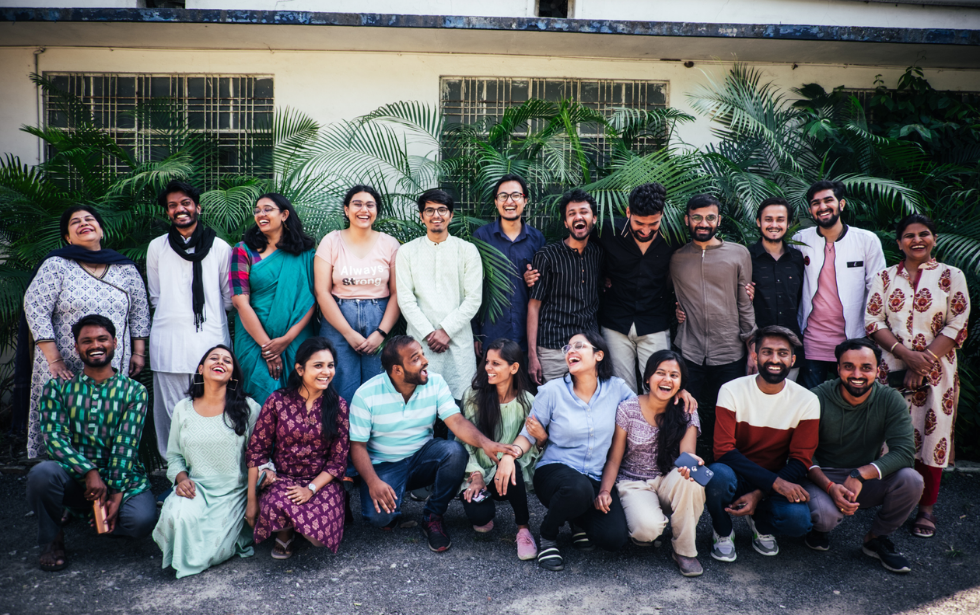
2022 | A path to government scale
In 2022, Pinterest selected Brio as a Purpose Partner, and was a pioneering supporter in scaling up Hausla systematically through government partnership. That September, an MOU was signed with the government of Sirohi in Rajasthan to run the program with 2,000 educators in the district.
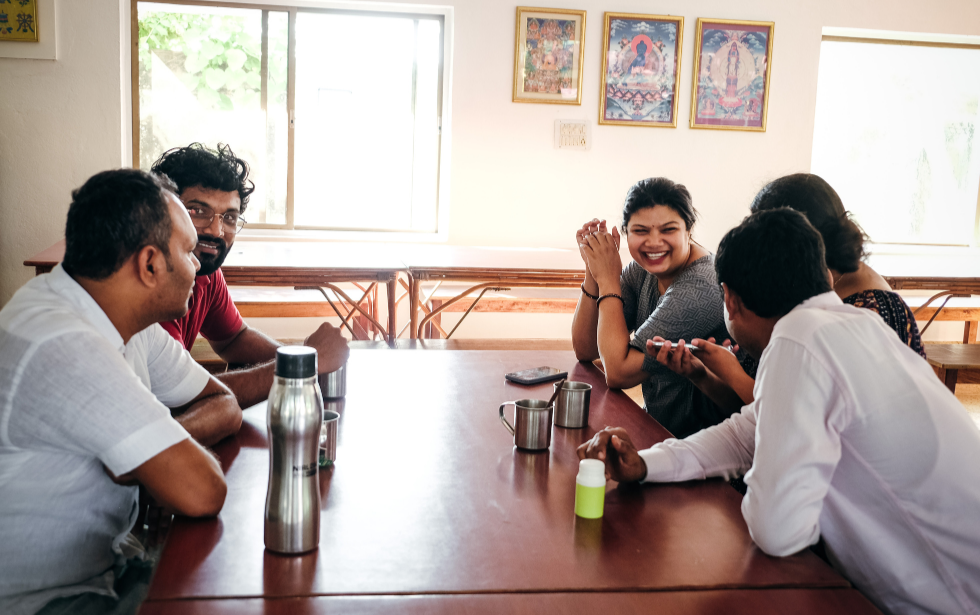
2022 | The Wellbeing-preneurs
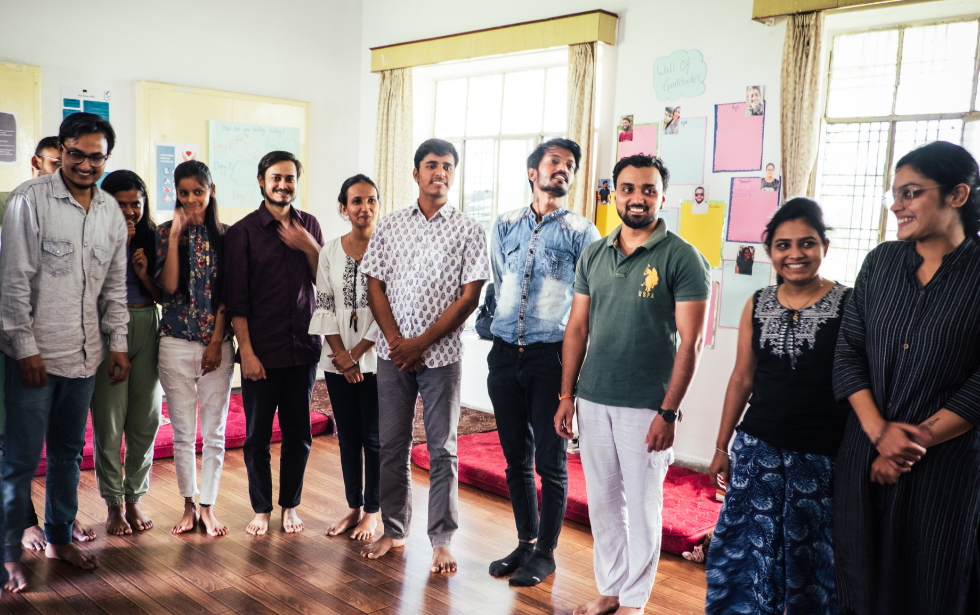
To reach and support every educator well, Kshamtalaya and Brio created a fellowship for social sector professionals who wanted to bring wellbeing into their own fields. The Wellbeing-preneurs invited and onboarded teachers into the program, ran vision-casting sessions with lead teachers, and facilitated spaces for conversation and reflection.
2023-today | Scaling through partnership
Interest in wellbeing is growing across India, especially in education and social sectors, as a core part of meaningful work and lasting impact. Since its success in Sirohi, the program has run with 2,000 more teachers in Bihar and scaled into new government teacher training, reaching 128,500 teachers through government partnership and NGO partners who have adopted and replicated it.
What’s the impact so far?
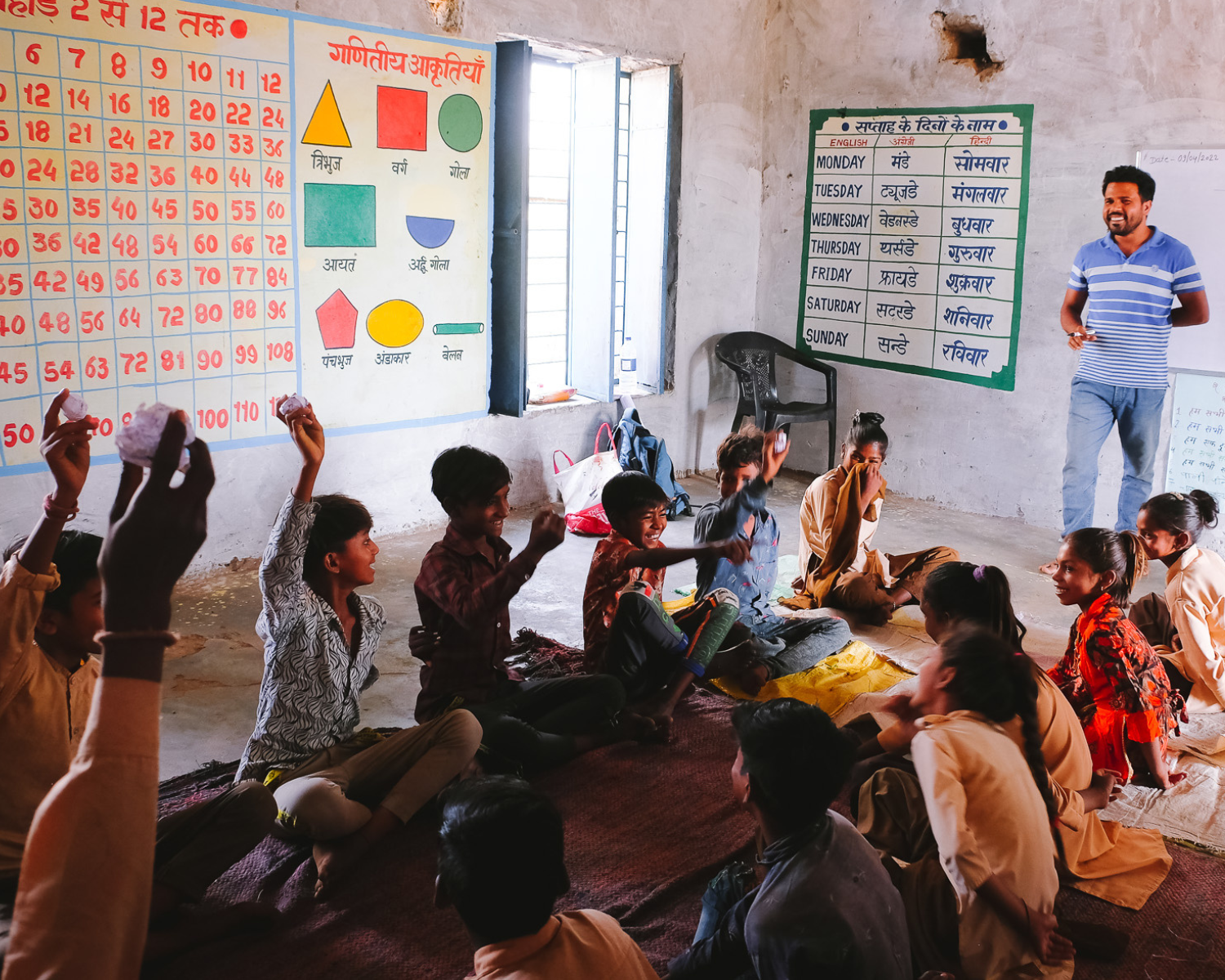
In communities with few options for clinical care, it’s crucial that mental health is addressed at the population level. Hausla showed that’s possible: through government partnership and thoughtfully trained non-expert facilitators, far more teachers were reached than a clinical-only model ever could, with statistically significant improvements of medium effect size.
Countless teachers have shared that Hausla gave them meaningful ways to navigate their inner experiences– particularly the difficult thoughts and emotions that come with a hard, often isolating job. And the data holds that up in pre/post evaluations across the cohorts we have directly run.
70%
improved on the WHO-5 Wellbeing Index (direct implementation cohorts)
effect size = 0.49
59%
improved on the Kentucky Inventory of Mindfulness Skills (direct implementation cohorts)
38%
improved on the Connor-Davidson Resilience Scale (direct implementation cohorts)