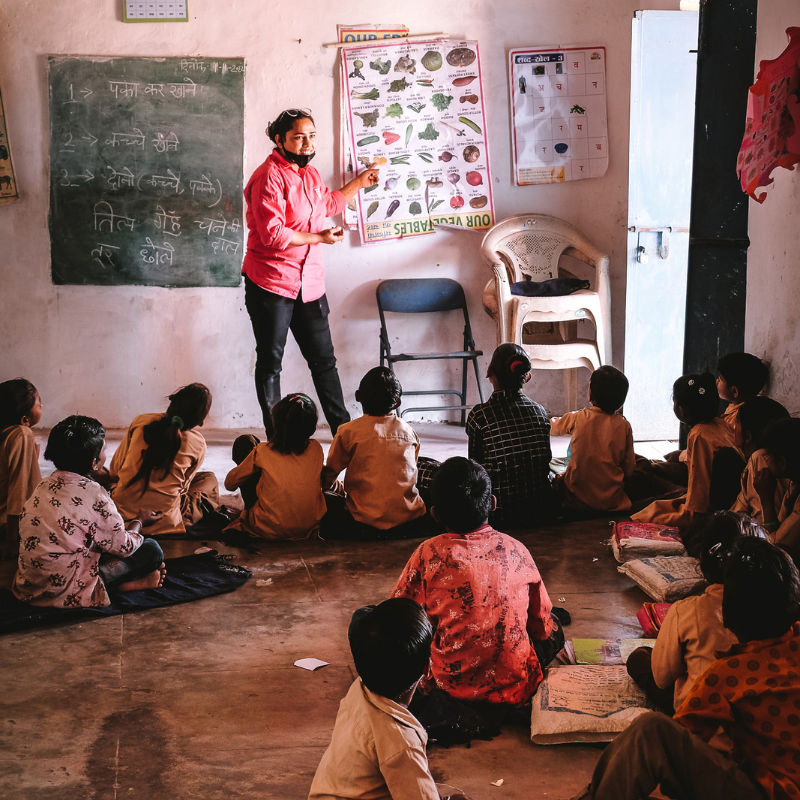
Hausla – mental health skills for teachers
Helping educators take charge of their own wellbeing
Hausla – mental health skills for teachers
Helping educators take charge of their own wellbeing
Teachers are society’s most critical workforce.
Teachers play an extraordinary role in the lives of millions of children. They are day-to-day stewards of culture, behavior, safety, and support. Year after year, they are tasked with helping students learn not only academic concepts but skills for being human.
In a stressful, high-demand vocation, stronger teacher wellbeing leads to better classroom decision-making and healthier classroom environments. When educators have agency over their own inner lives, their classrooms become more compassionate, nurturing, and engaging.
Hausla exists to make that possible, at scale.
Our education systems are burning teachers out.
India has over 10 million government school teachers. Most work in under-resourced settings, often alone, navigating significant professional and personal stress with little support. They are often tasked with non-teaching work including health check-ins during Covid, or supporting government processes such as voting or census. Recent surveys have indicated that up to 78% of teachers are burned out, affecting their ability to show up everyday for the students in their classroom.
Many efforts in teacher training have focused on improving their teaching. But the reality is that many teachers are simply exhausted and struggling with their mental health. Poor mental health and burnout are associated with depersonalization of students, teacher absenteeism, and even the use of fear-based tactics in response to students.
And the evidence is clear: teacher wellbeing directly shapes student outcomes. Teachers who develop psychological flexibility, emotional regulation, and a sense of purpose don’t just feel better; they show up differently for their students.
Teachers have the agency to change their experience.
The burden on teachers is undeniable. But they are not trapped in a cycle of overwhelm and reactivity.
With strong mental health, teachers have greater agency over how they respond to students in the midst of a challenging day. They can face daily moments of stress, conflict, and exhaustion with greater stability and values-aligned action. They can choose to come to school, even when they don’t feel like it, because their students need their nurturing presence. Wellbeing enables teachers to create patient learning environments where students feel safe to ask questions, make mistakes, and try again.
Whether students flourish in school begins with their teacher.
What is Hausla?
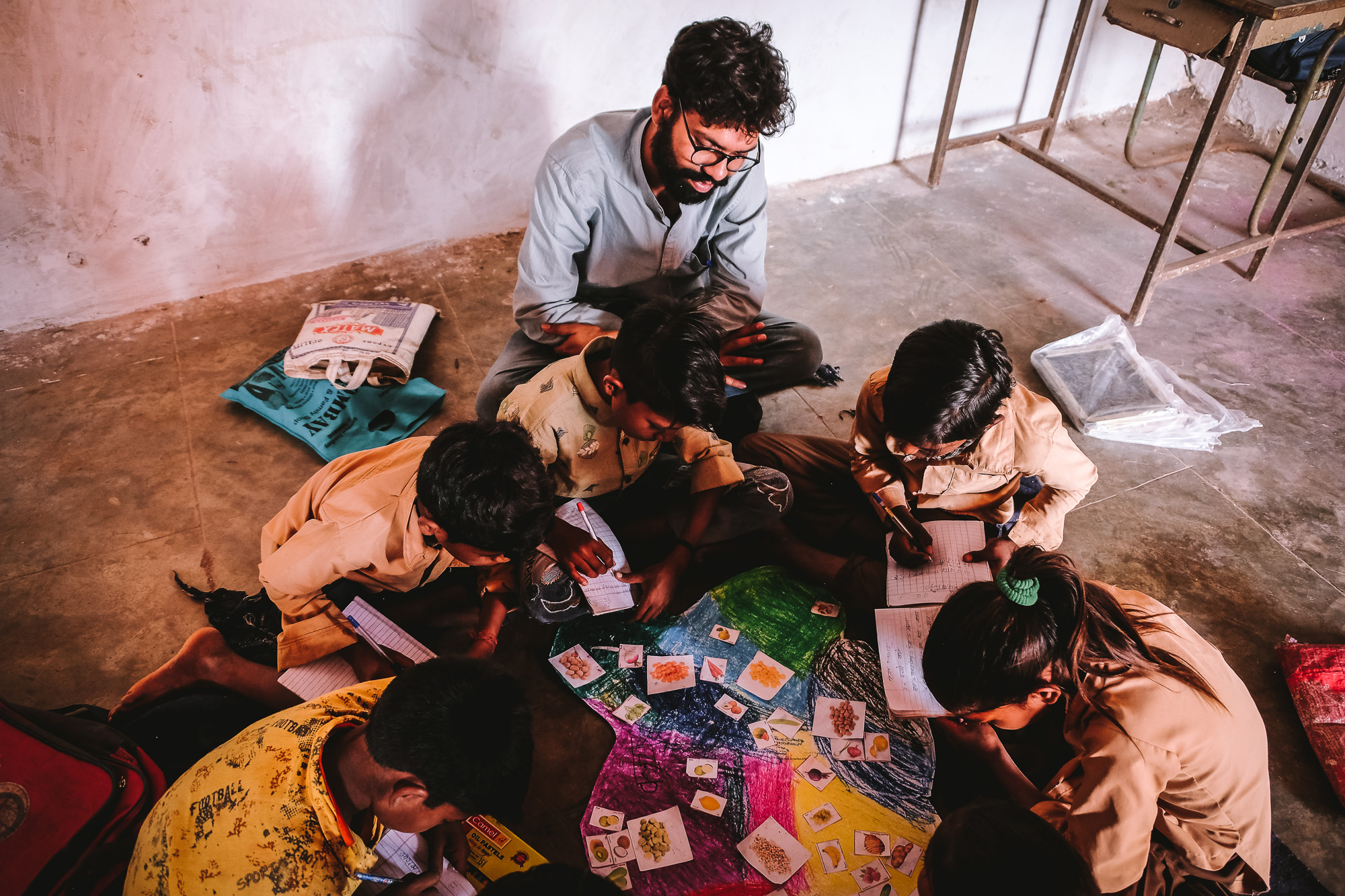
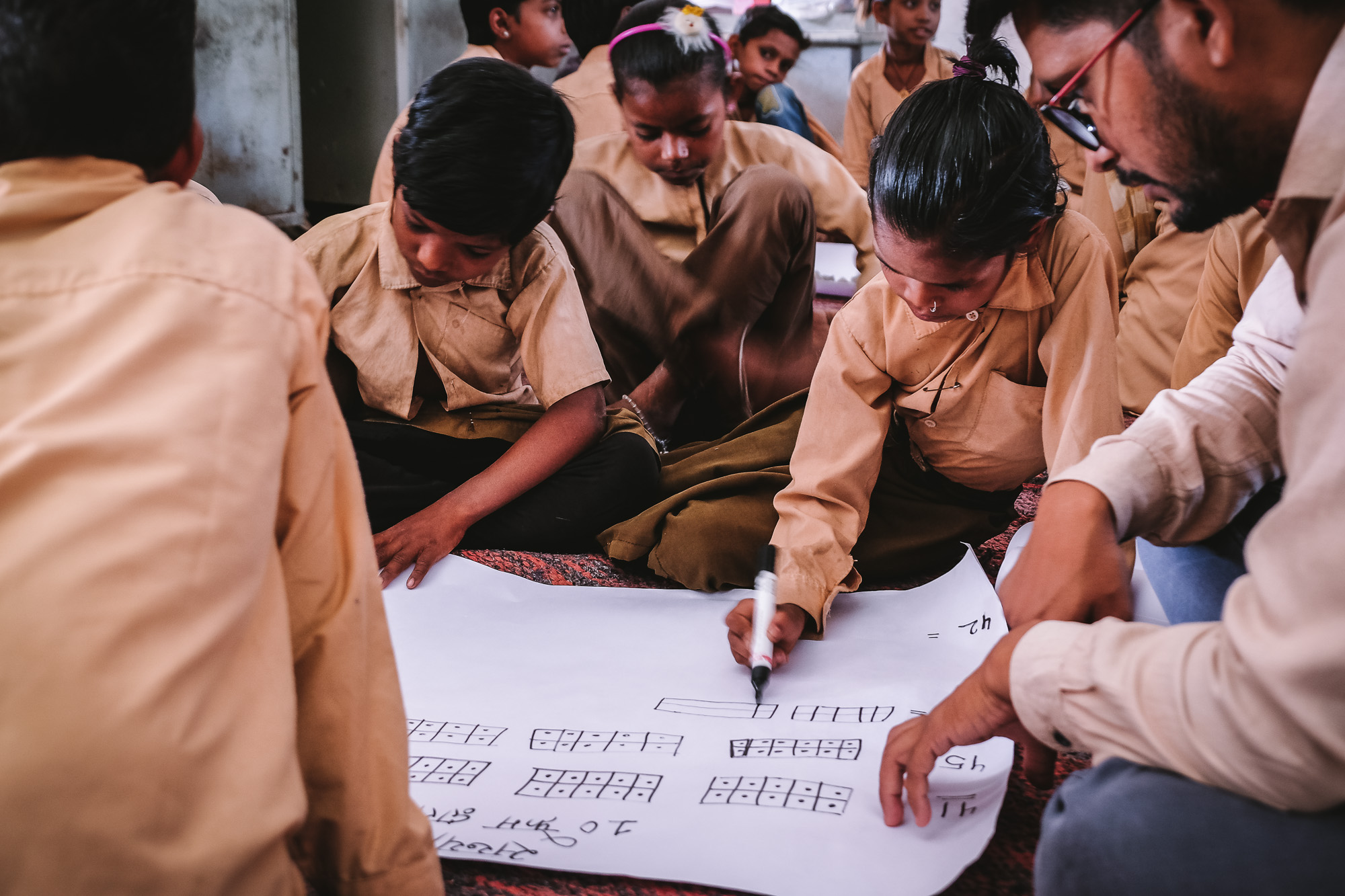
Hausla is a 21-day mental health program designed for government school teachers in India. Through WhatsApp-delivered audio stories and guided practices, teachers build psychological flexibility, emotional regulation, and resilience— skills they can draw on in the classroom and in life. Centered on Acceptance and Commitment Training, a research-backed behavioral approach for strengthening mental health, the program focuses on three key skills: Be Present, Have Compassion, and Do What Matters.
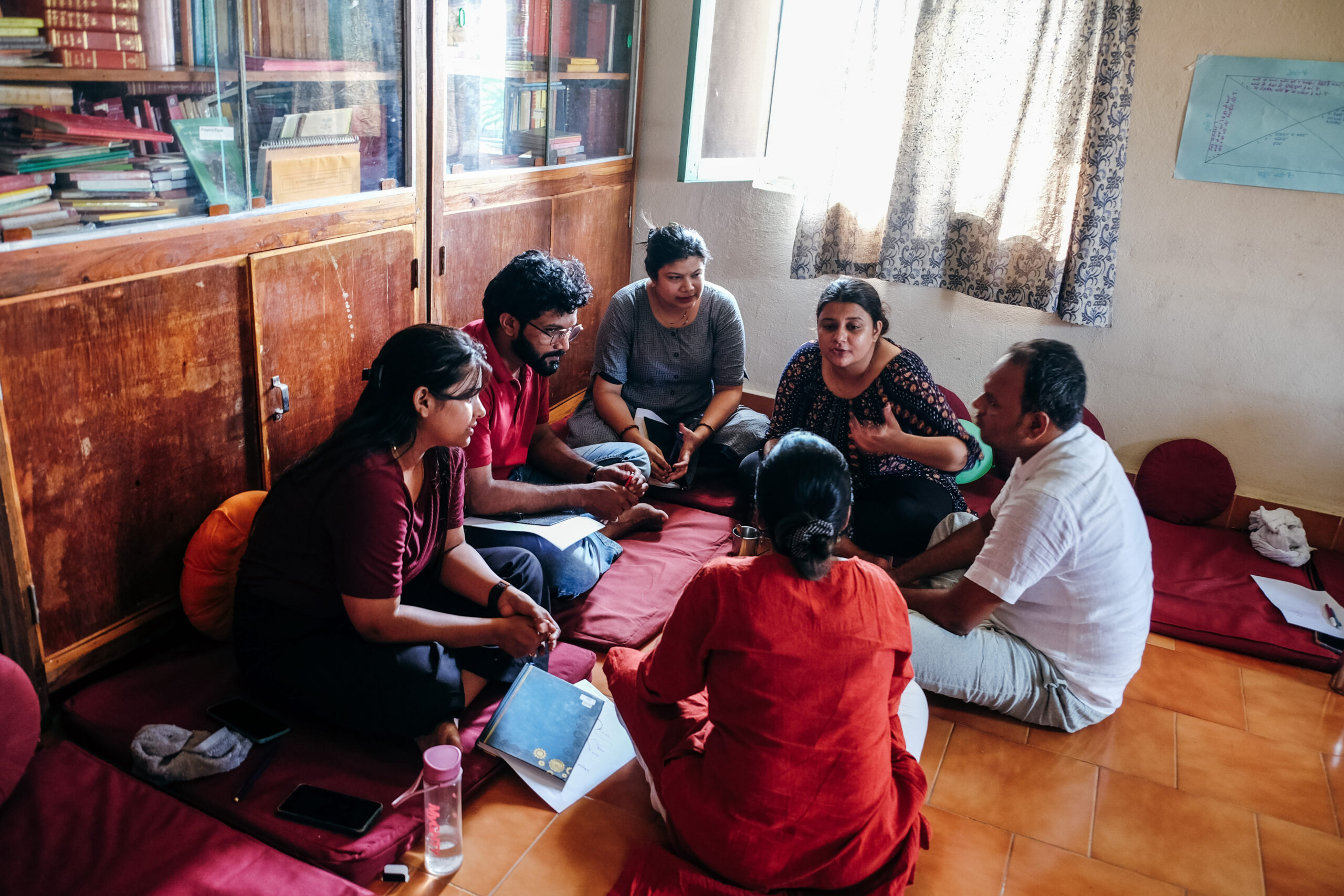
Crucially, Hausla is not a purely digital experience. A trained facilitator holds weekly check-ins with participating teachers and creates spaces for peer reflection and shared learning throughout the program. This human connection with a facilitator and with peers is central to what makes Hausla work.
Developed in partnership with Kshamtalaya Foundation, Hausla was designed from the ground up for teachers in hard-to-reach locales— accessible to anyone with a basic smartphone, and deliverable through existing government and civil society networks.
See it in action
Teachers reached
%
Participants improved their wellbeing
Effect size (Cohen's d)
What is the impact so far?
Since launching in 2020, Hausla has reached over 135,000 government school teachers across India, scaling through state government partnerships in Rajasthan, Bihar, and Delhi.
In pre/post evaluations using validated measurement tools, 69% participants showed statistically significant improvements on the WHO-5 Wellbeing Index with an effect size of 0.49 (Cohen’s d).
Additionally, when combined with training on wellbeing for students, 96% started their own wellbeing practices and gave the full training experience a Net Promoter Score of 71.
These results point to something important: in communities with few options for clinical mental health support, population-level approaches delivered through trusted, trained non-experts can generate measurable change. Hausla demonstrates that it is possible to reach large numbers of teachers— and see real outcomes— without a clinical model. Furthermore, it demonstrates that all teachers can benefit, regardless of their current mental health state.
Learn how we measure impact here.
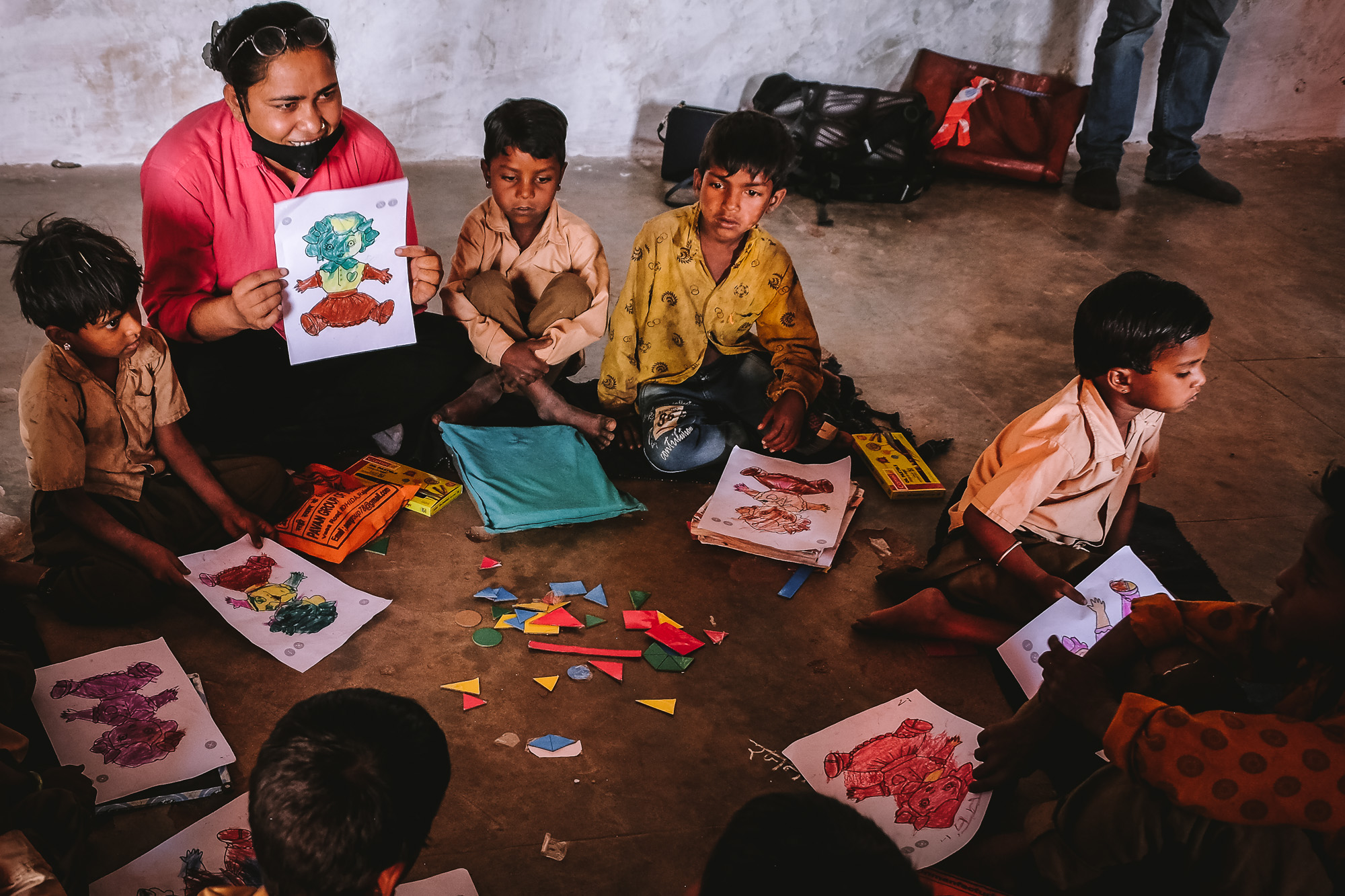
What have we learned?
Human connection is the multiplier
While we have refined the pre-recorded audio component of Hausla through rounds of participant feedback, one of the powerful aspects of the program is teachers’ experience of a cohort and a facilitator who reaches out and checks in with them. This process is straightforward— facilitators are trained with an outreach protocol that offers support teachers need without intensive oversight or heavy supervision. Despite its simplicity, the social connection component appears to contribute to the positive outcomes we are seeing with teachers who go through this facilitated process. In many of the live debriefs, educators share that they wish more of these spaces were available to them in an ongoing manner.
Experiential knowledge of wellbeing changes how teachers teach
As more education systems integrate mental health and wellbeing initiatives for students, it is critical for teachers not only to understand the concepts of wellbeing but ideally also to practice it themselves. Many participants shared that they had led social-emotional curricula assigned to them in the past with their classrooms, but did not understand why they were doing those activities until completing Hausla for themselves. Just as we would not ask someone without mastery of basic math to teach math, it’s critical to ensure educators have experiential knowledge of the wellbeing content they are asked to facilitate.
Wellbeing sustains the work
Teachers the world over have a demanding and important job. Their sense of engagement and commitment at work directly affects the children in their classrooms. Many Hausla participants shared how the program restored their sense of resilience and inspiration, improving the way they respond to students. By learning how to navigate their own inner experiences, connect to a sense of purpose, and strengthen their relationships, teachers experienced more vitality and stability.
What’s next: Hausla Companion
Hausla’s 21-day program creates a powerful shift. But shifts need to be sustained— and right now, there is no structured support for teachers once the program ends.
The next phase of Hausla introduces an AI-powered companion, trained on Hausla’s content and principles, to help teachers maintain and deepen their mental health practices over time. The companion will:
- Help teachers set personal wellbeing goals and build sustainable practices
- Offer timely prompts to support teachers in staying committed to their wellbeing
- Suggest activities and reflections rooted in Hausla’s framework
- Guide teachers in bringing their wellbeing practices into the classroom to benefit their students
With 135,000 teachers already having completed the program, and established government partnerships providing a direct channel to millions more, Hausla is positioned to reach 1 million+ teachers in India by 2030. This is the sea-change necessary to sustain one of the most important vocations of any society, and the most strategic investment in children’s development and wellbeing that we can make.