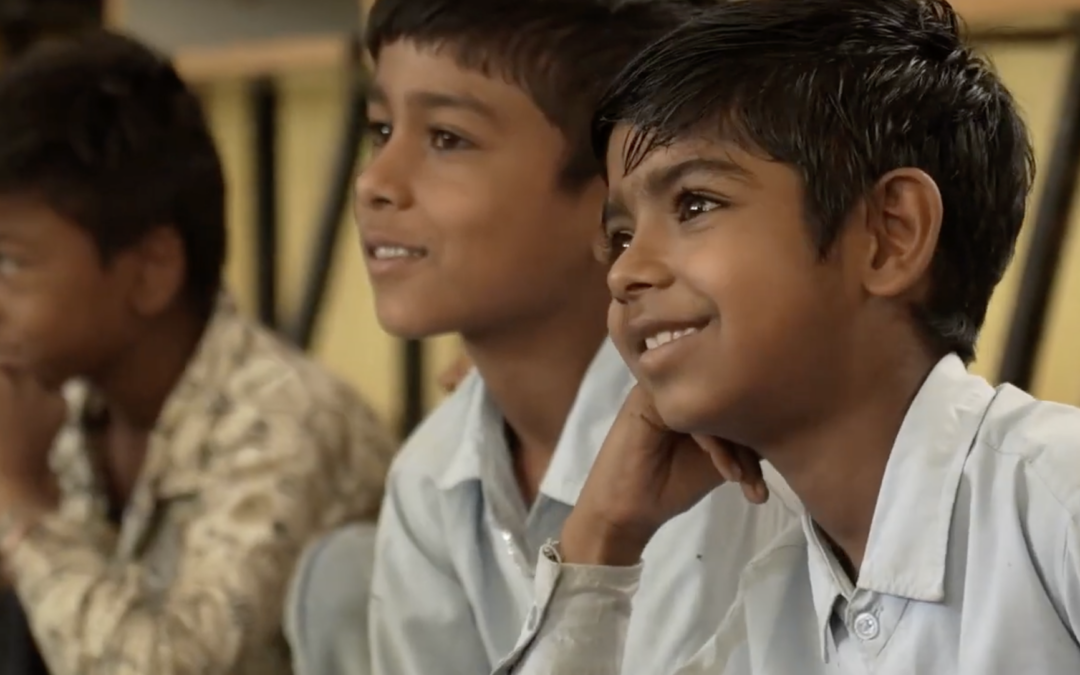
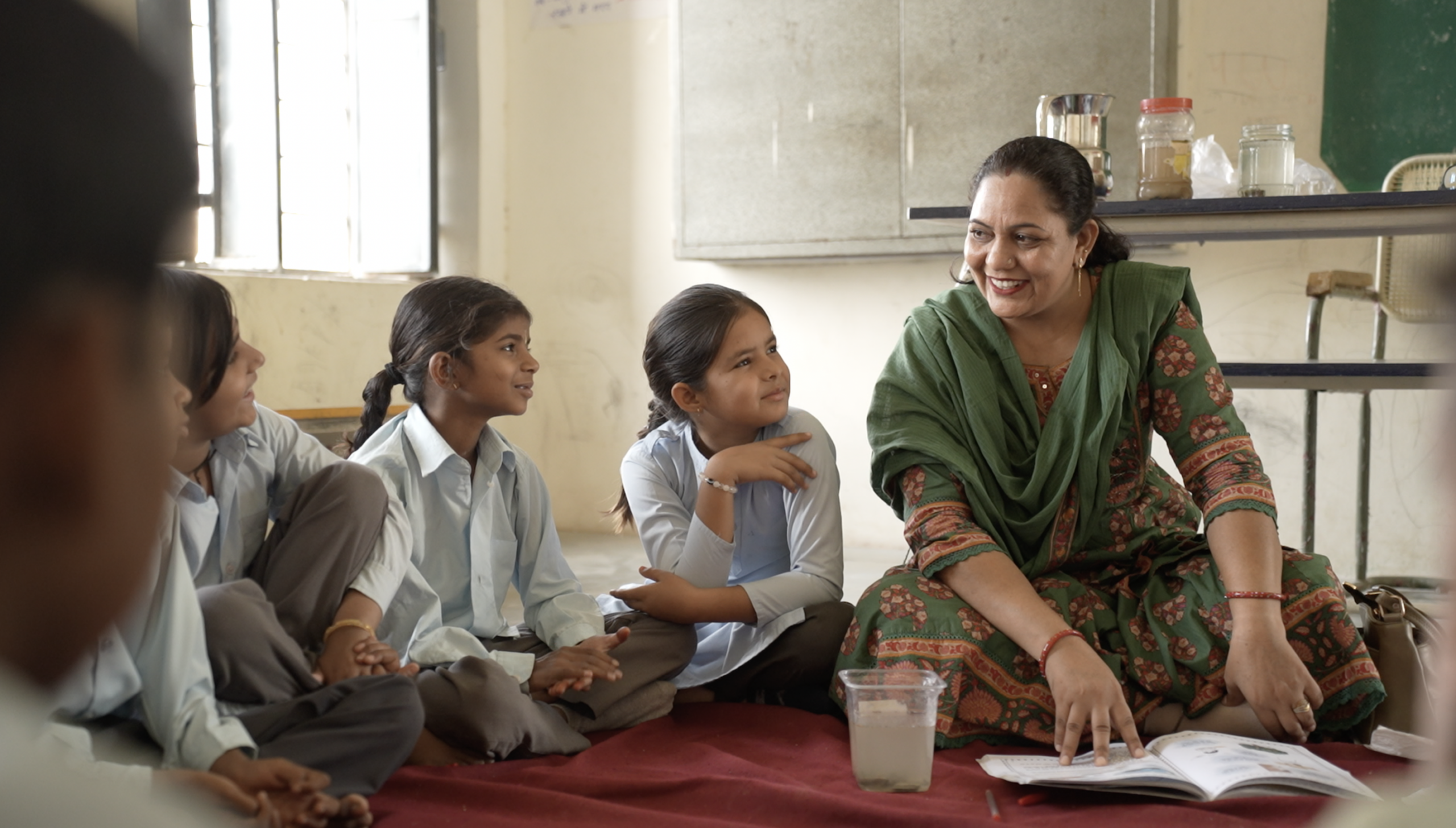
In a school in Hanumangarh, not far from India’s border with Pakistan, a teacher named Usha offers her students a body-scan activity. Slowly, they learn to notice sensations, then thoughts, then feelings. “All this gives me an insight into how my children are learning,” she told us. “I never noticed my body till this age. Now I feel happy that I got to learn that, too.”
Usha is one of thousands of teachers across Rajasthan who are receiving this training not because of a pilot grant or a philanthropic push, but because the state itself has decided to pay for it. In May 2026, Rajasthan’s Education Department approved the largest in-person teacher training budget in the state in 30 years: over 11,300 new teachers will spend three full days learning Khushi Shala, our mental health model for primary classrooms, developed together with Kshamtalaya Foundation and Rajasthan’s own education officials over six years.
This is not a renewal or an add-on. It’s a state government choosing, deliberately and at real cost to itself, to bet on a vision: that every child in Rajasthan— no matter how rural their village— deserves a teacher equipped to help them flourish.
Why Rajasthan’s co-investment is crucial for long-term impact
Governments co-developing a curriculum with a nonprofit partner isn’t rare. What’s rare is a government funding the mechanism of change itself: teacher time, training logistics, and delivery in classrooms, at scale. Combined with returning cohorts and a separate allocation through PM Shri, India’s national model-schools initiative, 15,258 teachers will be trained in-person by 2027— enough to place a Khushi Shala–trained educator in every panchayat in the state.
We want to be clear about whose win this is. It’s a win for teachers like Usha, whose wellbeing is finally treated as the starting point rather than an afterthought.
It’s a win for the more than 3.3 million children who will have a teacher equipped to help them notice their feelings, name what matters to them, and act on it.
And it’s a win for Rajasthan itself: a state betting its own budget and credibility on the idea that mental health belongs in every classroom, not just the ones we can reach with grant funding.
As Shweta Fageria, Director of RSCERT, put it: “The success of the pilot study, the joy on children’s faces, the feedback from teachers and parents— all this has helped us decide that we will implement this program across the state.”
What this means for us
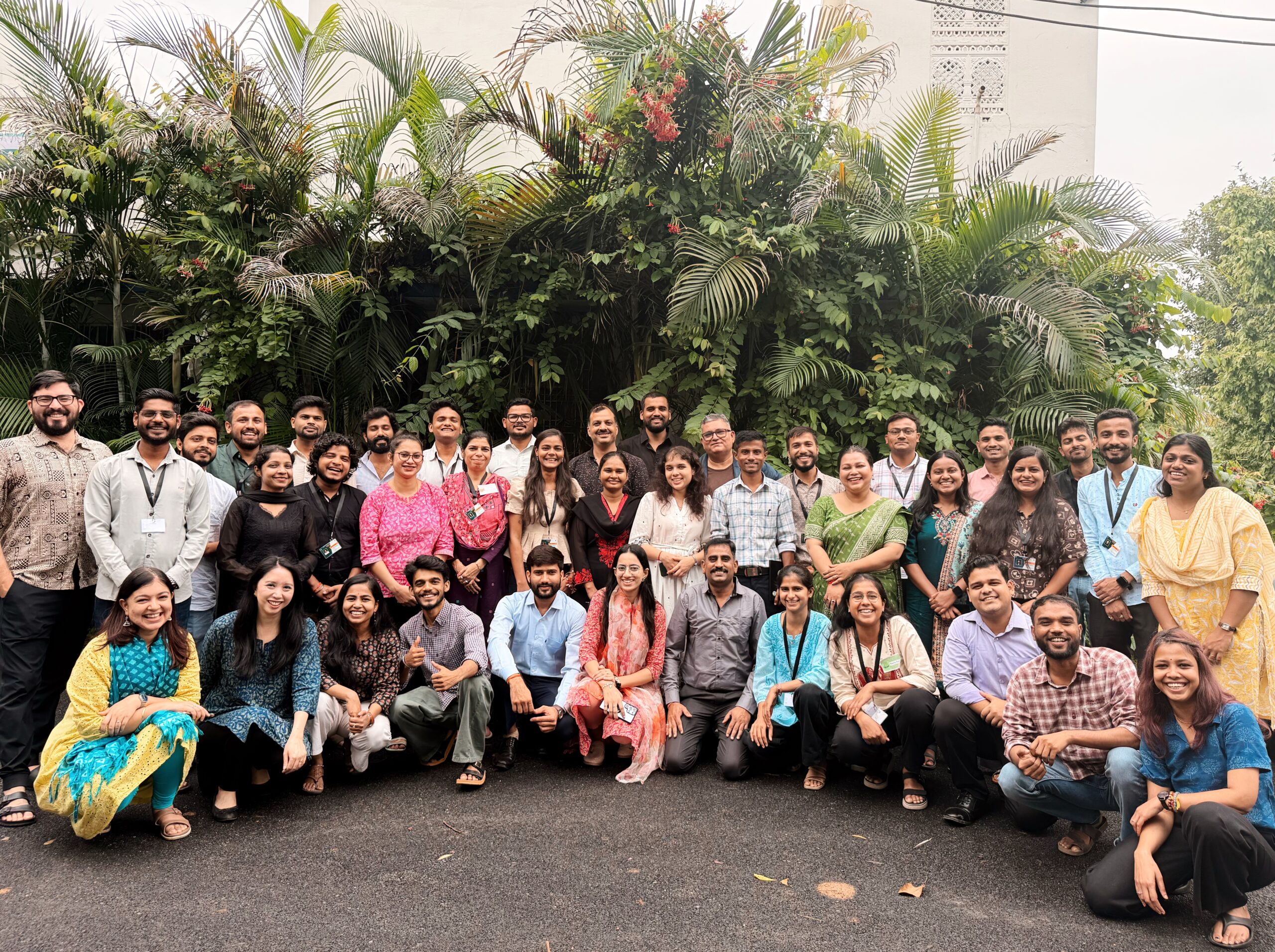
We’ve spent six years collaborating our way into this moment: co-creating alongside teachers, listening more than prescribing, building the evidence one classroom at a time. None of it happened because we handed the government a finished solution. It happened because Rajasthan’s own leaders came to believe, on their own evidence and their own terms, that this is worth their investment.
That’s what it looks like when radical collaboration leads to classroom transformation and public policy. We’re honored to keep showing up alongside them.